TL;DR
- National HealthCare Corporation (NYSE: NHC) is a publicly traded operator of skilled nursing facilities, assisted living communities, and homecare services, headquartered in Murfreesboro, Tennessee.
- NHC is not a telehealth company. It runs physical buildings with staff and beds, while platforms like Zealthy deliver provider visits and prescriptions entirely online.
- The two models solve different problems. NHC handles post-acute and long-term care for patients who need supervision; telehealth handles routine prescriptions and ongoing condition management for people who don't need a facility at all.
- They get paid differently too. Facility care is billed per day of occupancy; telehealth typically bundles visits and medication into one flat monthly cost.
- If you searched "national healthcare corp" for investor information, a facility location, or because you need a prescription handled without a waiting room, this sorts out which one you're actually looking for.
Maria typed "national healthcare corp" into Google at 11 p.m. from a hospital parking lot, three hours after her dad's hip surgery. A discharge planner had floated "NHC" as a rehab placement, and she wanted to know what she was signing him up for. What came back was stock tickers, investor relations pages, and SEC filings. Nothing in plain English. Nothing that told her whether this had any connection to the app she'd used that morning to refill her own anxiety medication.
Here's the breakdown she needed.
Table of Contents
- What does National HealthCare Corporation do?
- What type of company is NHC?
- How does NHC's service model differ from direct-to-consumer telehealth?
- What conditions and patient populations does each one actually serve?
- What operational and financial differences set them apart?
- So which one actually helps you right now?
- Frequently asked questions
What does National HealthCare Corporation do?
National HealthCare Corporation operates skilled nursing facilities, assisted living residences, independent living communities, and homecare and hospice programs, mostly across the southeastern and central United States. Its headquarters are in Murfreesboro, Tennessee, and it trades on the NYSE under the ticker NHC.
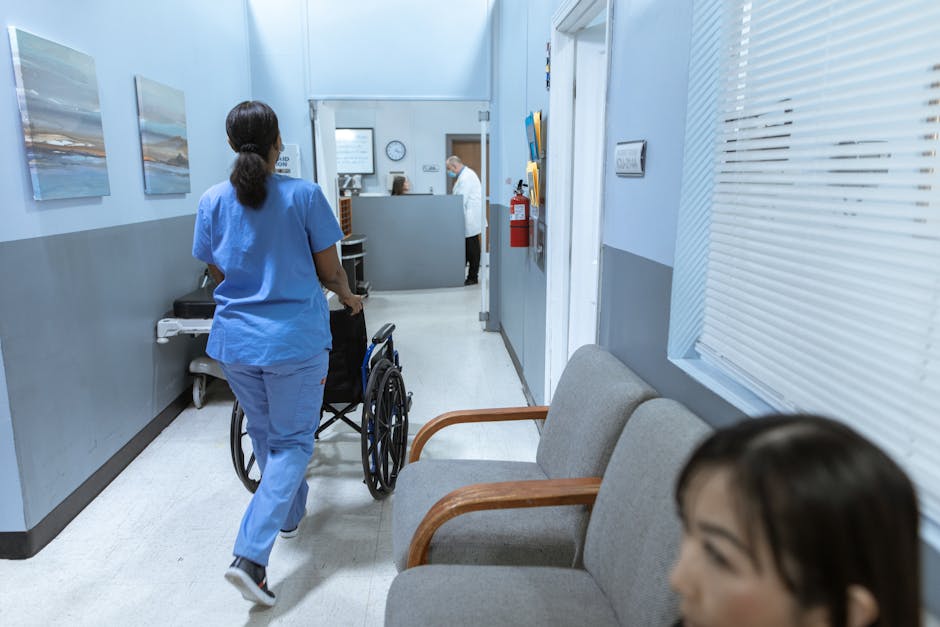
The business is built on physical real estate. Buildings, licensed beds, nurses, therapists, aides, and in many cases around-the-clock medical and custodial care. So if a hospital case manager says "NHC" during a discharge conversation, they mean a nursing facility placement: a room, a bed, and a care team on-site. They do not mean a digital health service.
What type of company is NHC?
It's a brick-and-mortar care operator, not a direct-to-consumer brand. That distinction matters more than it sounds, because it tells you who sends the bill and how it gets calculated.
Four different buckets, four different financial engines:
- Facility operators (NHC). Paid per occupied bed per day by Medicare, Medicaid, or private pay. Occupancy and length of stay drive everything.
- Insurers (Molina Healthcare, for example). Collect premiums, pay claims. They don't deliver care; they finance it.
- Retail pharmacy chains (CVS). Make money on prescription volume and whatever you pick up on the way to the counter.
- Direct-to-consumer telehealth (Zealthy). No buildings, no beds, no staffing ratios. Licensed providers on video, medication shipped to your door, usually on a flat monthly price.
One practical consequence families miss: Medicare's coverage of a skilled nursing stay depends on a qualifying inpatient hospital admission beforehand, and even then coverage runs out after a limited stretch of days, with coinsurance kicking in partway through. "Observation status" in the hospital does not count as an inpatient admission. That single technicality is why some families open a statement a month later and find a five-figure private-pay balance they thought was covered. Ask the case manager, in writing, whether your parent was admitted or observed. Ask before discharge, not after.
How does NHC's service model differ from direct-to-consumer telehealth?
NHC exists because some patients genuinely need to be somewhere. Someone recovering from a stroke or a hip fracture needs physical therapists, nursing staff, and supervised medication administration under one roof. You can't do that over a video call.
Direct-to-consumer telehealth exists for the opposite reason: most routine prescription care never required a building in the first place. A birth control refill, a GLP-1 dose adjustment, a check-in about an SSRI you've been stable on for two years. That's ten minutes with a licensed provider and a pharmacy that ships.
That second category is what Zealthy is built for. You sign up in about five minutes, meet with a US-licensed provider, get a treatment plan written for your situation, and your prescription arrives with automatic refills so you're not re-starting the process every 30 days. It's the same lane other direct-to-consumer telehealth brands compete in, including smaller operators like yourxhealth.com.
Pro tip: If anyone on the care team says the words "skilled nursing" or "inpatient rehab," don't try to substitute a telehealth visit. But do the reverse favor for yourself. During a rehab stay, the facility pharmacy takes over your parent's medications, which means their outside refills can quietly lapse and reorder at the wrong dose on discharge day. Bring a printed med list to the discharge meeting and have someone reconcile it line by line before you leave the parking lot.
What conditions and patient populations does each one actually serve?
NHC's population skews older, post-acute, and higher acuity: post-surgical rehab, long-term dementia care, hospice. Telehealth serves a broader and generally healthier group managing conditions that don't require supervision:
- Weight management with GLP-1 medications like Zepbound, Wegovy, and Ozempic, paired with ongoing coaching between doses.
- Sexual and reproductive health, including birth control refills and erectile dysfunction treatment.
- Mental health, with ongoing medication management for anxiety and depression.
- Hair loss, acne, rosacea, and hyperpigmentation, treated with prescription topicals and orals.
- Preventive care, including PrEP for HIV prevention and primary care check-ins.
None of that needs a bed. It needs a licensed prescriber and a supply chain that doesn't drop the ball, which is the premise behind Zealthy's GLP-1 weight loss program and its approach to semaglutide treatment.
What operational and financial differences set them apart?
The cleanest way to see it is to look at how each business gets paid and what it has to manage day to day.
| Factor | NHC (skilled nursing operator) | Direct-to-consumer telehealth |
|---|---|---|
| Core asset | Physical facilities, licensed beds | Software platform, provider network |
| Revenue model | Per diem billing to Medicare, Medicaid, or private pay | Flat subscription or per-visit fee |
| Staffing | On-site nurses, aides, and therapists, 24/7 | Licensed providers available by video |
| Typical duration | Days to months for rehab, years for long-term care | Months to years, managed from home |
| Regulatory focus | State licensure, CMS survey compliance | State telehealth and pharmacy licensing |
| Growth driver | Occupancy rate and bed count | Patient acquisition and subscriber retention |
Run the math on both sides
Here's an illustrative scenario using round numbers, not quoted rates. Plug in your own.
Facility stay. The formula is days × daily rate. Say Maria's father needs a 20-day short-term rehab stay and the facility's private-pay rate is $350 a day:
20 × $350 = $7,000 before any insurance offset.
Move that rate to $400 and the same 20 days becomes $8,000. Add five days and it's $10,000. The number is almost entirely a function of length of stay, which is why discharge planning conversations get tense around day 14.
Your own prescription. The formula is visits per year × (copay + value of time lost). Maria needs a provider check-in every three months to keep her anxiety prescription current. At a $150 copay, that's:
4 × $150 = $600 a year in copays alone.
Now count the half day of work each visit costs her. At $30 an hour for four hours, that's 4 × 4 × $30 = $480 in lost wages, pushing the real annual number past $1,000.
The rule of thumb: if your condition is stable and your care is basically "see a provider, confirm the plan, send the refill," multiply your copay by four and add your time. If that total beats a flat monthly telehealth subscription, you're paying for a waiting room you don't need. And if you've ever had a refill stall because the counter was three days behind, that's the same friction covered in why CVS pharmacy waits cost you refill days.
So which one actually helps you right now?
If you're coordinating care for a parent after surgery or a serious diagnosis, a facility-based operator like NHC is the right tool and no app replaces it. Call the facility directly, ask about current staffing on the rehab unit, and ask how many therapy minutes per day your parent is scheduled for. Facilities vary enormously on that last answer, and it predicts recovery more than the lobby furniture does.
If you're the adult child in the parking lot who also hasn't refilled your own medication in six weeks, that's a different problem with a much faster fix. A few minutes with Zealthy's FAQs or the page about the company will tell you whether your medication qualifies, whether that's birth control, a GLP-1, an SSRI like the one covered in fluoxetine for anxiety and depression, or enclomiphene therapy explained in enclomiphene treatment options for men.
Next step: If what brought you here was your own prescription rather than a facility placement, start a visit with Zealthy and get your treatment plan the same day.
Frequently asked questions
Where is National HealthCare Corporation located?
NHC is headquartered in Murfreesboro, Tennessee, with skilled nursing, assisted living, and homecare locations concentrated across the southeastern and central United States. Individual facility addresses and phone numbers are listed on NHC's own corporate site, not in any telehealth directory.
How do I find NHC's investor relations or stock ticker information?
NHC trades on the NYSE under the ticker NHC. Quarterly filings and shareholder materials are published on the company's investor relations page, which is where you'll find current figures rather than in general healthcare search results.
Can I use telehealth instead of a nursing facility for recovery care?
No. Telehealth fits stable, ongoing conditions like weight management, mental health medication, or skin treatment. It doesn't fit acute post-surgical recovery or anything requiring 24-hour supervision. When a patient needs hands-on monitoring and daily therapy, facility-based skilled nursing is the correct setting, and trying to substitute a video visit delays recovery instead of simplifying it.


